Have you ever heard that taking vitamins will give you more
energy
? Or have you bought a product that claimed it could boost your
energy
level because it has added vitamins? Based on the knowledge that you’ve learned in this course, you know that vitamins are not broken down in the body to provide
energy
. So where does the idea that vitamins give you
energy
come from? On this page we will provide an overview of the B vitamins and several minerals that are important to the process of
energy metabolism
in the body, and take a closer look at two of those vitamins (folate and vitamin B12) that have some important implications in our health.
The Role of B Vitamins and Minerals in
Energy Metabolism
All of the B vitamins and several minerals play a role in
energy metabolism
; they are required as functional parts of
enzymes
involved in
energy
release and storage. Many
enzymes
don’t work optimally, or even at all, unless bound to other specific helper molecules, called coenzymes or
cofactors
. Binding to these molecules promotes optimal conformation and function for their respective
enzymes
.
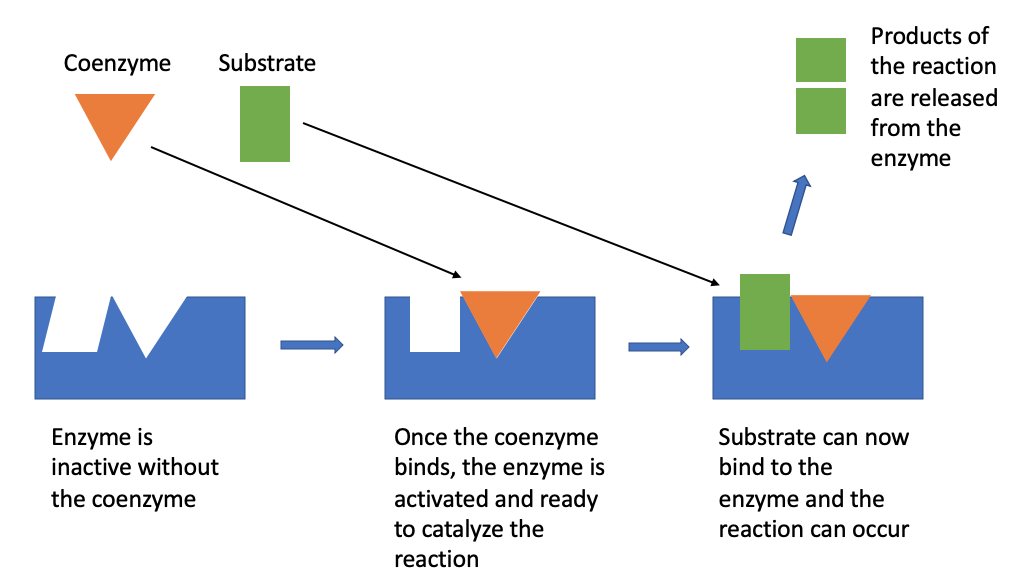
Figure 9.14. Role of a coenzyme assisting in an enzymatic reaction to break down a substrate.
Vitamins that bind to
enzymes
are referred to as coenzymes—organic molecules which are required by
enzymes
to catalyze a specific reaction. They assist in converting a substrate to an end product.
Cofactors
are the inorganic minerals that assist in these enzymatic reactions. Coenzymes and
cofactors
are essential in catabolic pathways (i.e. breaking down substances) and play a role in many anabolic pathways (i.e. building substances). Table 9.1 lists the vitamins and minerals that participate in
energy metabolism
and their key functions in that process.
Nutrients
Involved in
Energy Metabolism
B Vitamins
Role in
Energy Metabolism
Thiamin (B1)
Assists in glucose metabolism and RNA, DNA, and ATP synthesis
Riboflavin (B2)
Assists in carbohydrate and fat metabolism
Niacin (B3)
Assists in glucose, fat, and protein metabolism
Pantothenic Acid (B5)
Assists in glucose, fat, and protein metabolism, cholesterol and neurotransmitter synthesis
Pyridoxine (B6*)
Assists in the breakdown of
glycogen
and synthesis of
amino acids
, neurotransmitters, and hemoglobin
Biotin (B7)
Assists in amino acid synthesis and glucose, fat, and protein metabolism,
Folate (B9)
Assists in the synthesis of
amino acids
, RNA, DNA, and red blood cells
Cobalamin (B12*)
Protects nerve cells and assists in fat and protein catabolism, folate function, and red blood cell synthesis
Minerals
Role in
Energy Metabolism
Iodine
Assists in metabolism, growth, development, and synthesis of thyroid hormone
Manganese
Assists in carbohydrate and cholesterol metabolism, bone formation, and the synthesis of urea
Sulfur
A component in sulfur-containing
amino acids
necessary in certain
enzymes
; a component in thiamin and biotin
Chromium
Assists in carbohydrate, lipid, and protein metabolism, DNA and RNA synthesis
Molybdenum
Assists in metabolism of sulfur-containing
amino acids
and synthesis of DNA and RNA
*Normally used instead of common names
Table 9.1. Vitamins and minerals involved in
energy metabolism
and the role they each play.
Do B Vitamins Give You
Energy
?
Because B vitamins play so many important roles in
energy metabolism
, it is common to see marketing claims that B vitamins boost
energy
and performance. This is a myth that is not backed by science. The “feeling” of more
energy
from
energy
-boosting
supplements
stems more from the high amount of
added sugars
,
caffeine
, and other herbal stimulants that accompany the high doses of B vitamins in these products. As discussed, B vitamins are needed to support
energy metabolism
and growth, but taking in more than required does not supply you with more
energy
. A great analogy of this phenomenon is the gas in your car. Does it drive faster with a half-tank of gas or a full one? It does not matter; the car drives just as fast as long as it has gas. Similarly, depletion of B vitamins will cause problems in
energy metabolism
, but having more than is required to run metabolism does not speed it up. And because B vitamins are water-soluble, they are not stored in the body and any excess will be excreted from the body, essentially flushing out the added expense of the
supplements
.
Deficiency and Toxicity
The B vitamins important for
energy metabolism
are naturally present in numerous foods, and many other foods are enriched with them; therefore, B vitamin deficiencies are rare. Similarly, most of the minerals involved in
energy metabolism
and listed above are trace minerals that are not frequently deficient in the diet. However, when a deficiency of one of these vitamins or minerals does occur, symptoms can be seen throughout the body because of their relationship to
energy metabolism
, which happens in all cells of the body. A lack of these vitamins and minerals typically impairs blood health and the conversion of
macronutrients
into usable
energy
(i.e., ATP). Deficiency can also lead to an increase in susceptibility to infections, tiredness, lack of
energy
, and a decrease in
concentration
.1 Groups most at risk for a deficiency in any of these
micronutrients
are people on
calorie
-limited diets, people with imbalanced or insufficient nutrition, people with eating disorders, and people experiencing extensive levels of physical or emotional stress.1
Because of their water-solubility, toxicities of most of these
nutrients
are also uncommon, as excess intake is often excreted from the body. That doesn’t mean taking high doses comes without risks. Large quantities, particularly through
supplements
, can lead to adverse side effects or cause interactions with medications. For example, too much niacin can cause flushing of the skin or dangerous drops in blood pressure, and a high intake of B6 can lead to neuropathy. When taking vitamin or mineral
supplements
, always pay attention to the recommended dietary allowance and avoid exceeding the tolerable upper intake level (UL).
Folate
Folate, or vitamin B9, is a required coenzyme for the synthesis of several
amino acids
and for making RNA and DNA. Therefore, rapidly dividing cells are most affected by folate deficiency. Red blood cells, white blood cells, and
platelets
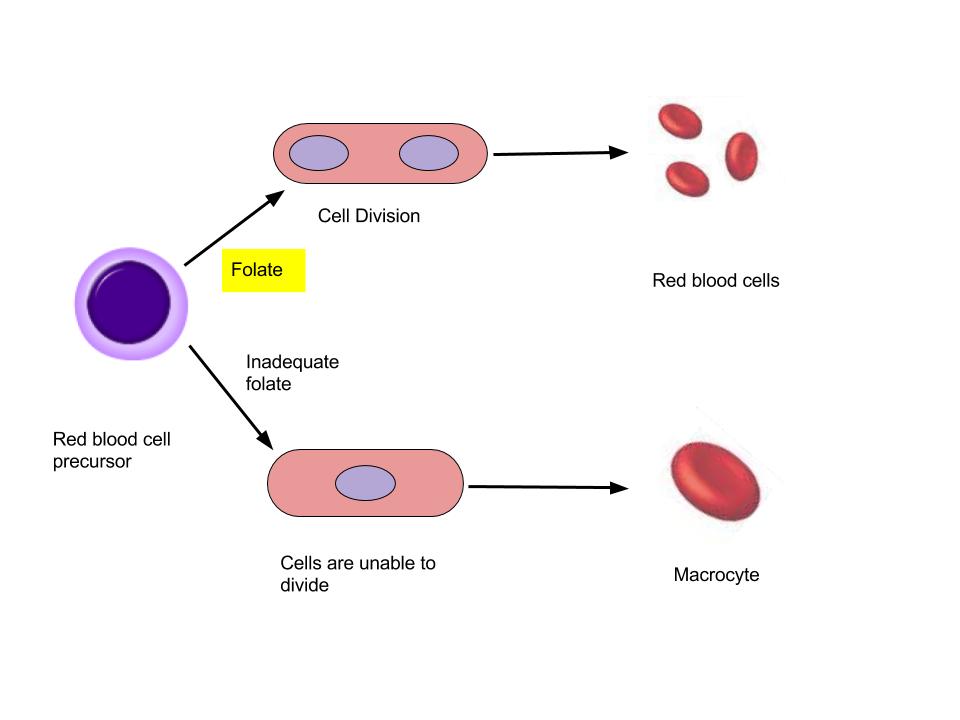
are continuously being synthesized in the bone marrow from dividing stem cells. When folate is deficient, cells cannot divide normally. A consequence of folate deficiency is macrocytic anemia. Macrocytic means “big cell,” and anemia refers to fewer red blood cells or red blood cells containing less hemoglobin. Macrocytic anemia is characterized by larger and fewer red blood cells that are less efficient at carrying oxygen to cells. It is caused by red blood cells being unable to produce DNA and RNA fast enough—cells grow but do not divide, making them large in size.Figure 9.15. Folate and the formation of macrocytic anemia.
Folate is especially essential for the growth and specialization of cells of the
central nervous system
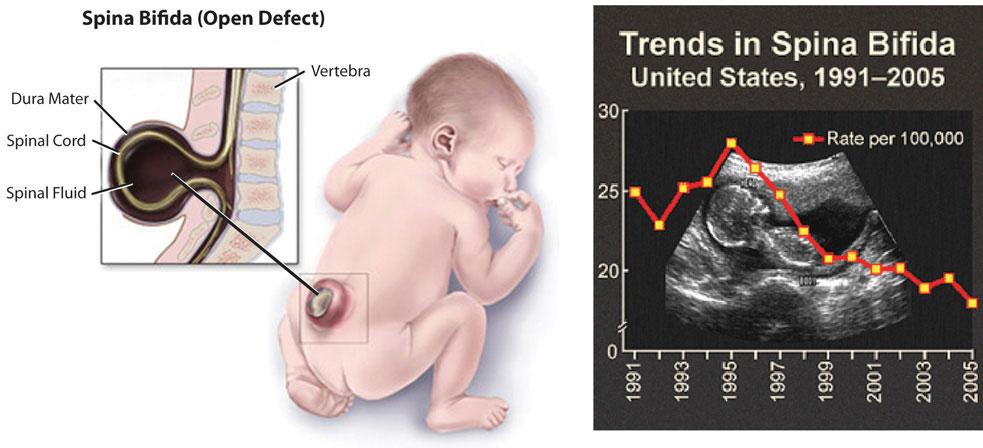
. Children whose mothers were folate-deficient during pregnancy have a higher risk of neural tube birth defects. Folate deficiency is causally linked to the development of spina bifida, a neural tube defect that occurs in a developing fetus when the spine does not completely enclose the spinal cord. Spina bifida can lead to many physical and mental disabilities (Figure 9.16). In 1998, the U.S. Food and Drug Administration (FDA) began requiring manufacturers to fortify enriched breads, cereals, flours, and cornmeal with folic acid (a synthetic form of folate) to increase the consumption of folate in the American diet and reduce the risk of neural tube defects. Observational studies show that the prevalence of neural tube defects was decreased after the fortification of enriched cereal and grain products with folate compared to before these products were fortified.Figure 9.16. Spina bifida (left) is a neural tube defect that can have serious health consequences. The prevalence of cases of spina bifida has decreased significantly with the fortification of cereal and grain products in the United States beginning in 1998.
Additionally, results of clinical trials have demonstrated that neural tube defects are significantly decreased in the offspring of mothers who began taking folic acid
supplements
one month prior to becoming pregnant and throughout pregnancy. In response to the scientific evidence, the Food and Nutrition Board of the Institute of Medicine (IOM) raised the RDA for folate to 600 micrograms per day for pregnant women.
Dietary Sources of Folate
Folate is found naturally in a wide
variety
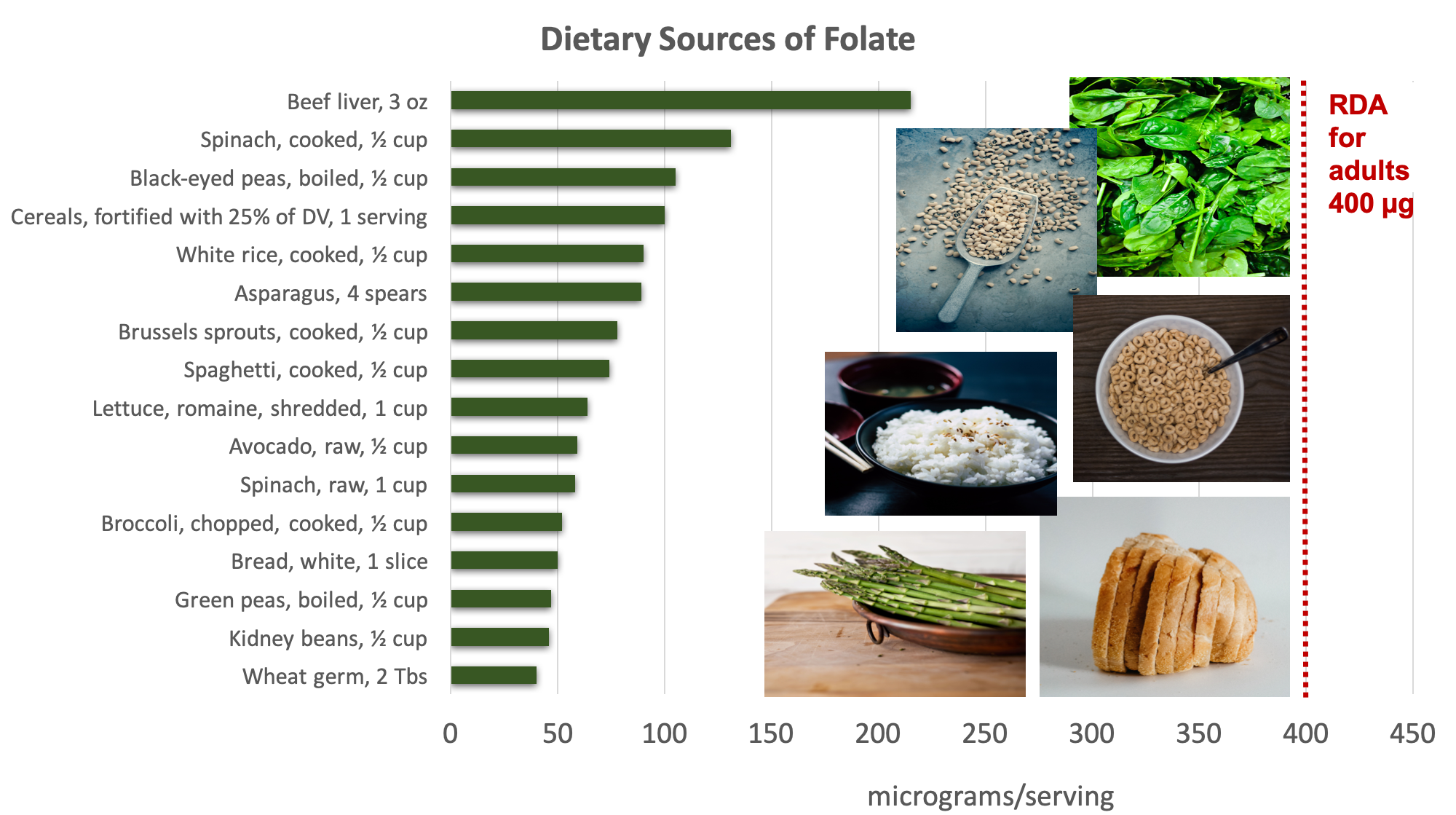
of foods, including vegetables (particularly dark leafy greens), fruits, nuts, beans, legumes, meat, poultry, eggs, and grains. As mentioned previously, folic acid (the synthetic form of folate) is also found in enriched foods such as grains.
Figure 9.17. Dietary sources of folate. Examples of good sources pictured include spinach, black-eyed peas, fortified cereal, rice, and bread and asparagus. Source: NIH Office of Dietary
Folate deficiency is typically due to an inadequate dietary intake; however, smoking and heavy, chronic alcohol intake can also decrease absorption, leading to a folate deficiency.2 The primary sign of a folate deficiency is macrocytic anemia, characterized by large, abnormal red blood cells, which can lead to symptoms of fatigue, weakness, poor
concentration
, headache, irritability, and shortness of breath. Other symptoms of folate deficiency can include mouth sores, gastrointestinal distress, and changes in the skin, hair and nails. Women with insufficient folate intakes are at increased risk of giving birth to infants with neural tube defects and low intake during pregnancy has been associated with preterm delivery, low birth weight, and fetal growth retardation.3
Toxicity of folate is not typically seen due to an excess consumption from foods. However, there is concern regarding a high intake of folic acid from
supplements
because it could mask a deficiency in vitamin B12. Because folate and vitamin B12 deficiencies are manifested by similar anemias, if a person with vitamin B12 deficiency is taking a high dose of folic acid, the macrocytic anemia would be corrected while the underlying B12 deficiency went undetected, which could result in significant neurological damage. Thus, a tolerable upper intake level (UL) has been established for folate to prevent irreversible neurological damage due to high folic acid intake masking a B12 deficiency.2
Vitamin B12 (Cobalamin)
Vitamin B12 is a unique vitamin because it contains an element (cobalt) and is found almost exclusively in animal products. Neither plants nor animals can synthesize vitamin B12; only bacteria can synthesize it. The vitamin B12 found in animal-derived foods was produced by microorganisms within the animals. Animals consume the microorganisms in soil, or microorganisms in the GI tract of animals produce vitamin B12 that can then be absorbed.
Vitamin B12 helps to prevent the breakdown of the myelin sheath, a cover that surrounds and protects nerve cells. It is also an essential part of coenzymes. It is necessary for fat and protein catabolism, folate coenzyme function, and hemoglobin synthesis. An enzyme requiring vitamin B12 is needed by a folate-dependent enzyme to synthesize DNA. Thus, a deficiency in vitamin B12 has similar consequences to health as a folate deficiency. In children and adults, vitamin B12 deficiency causes macrocytic anemia, and in babies born to cobalamin-deficient mothers there is an increased risk for neural tube defects.
In order for the human body to absorb vitamin B12, the stomach, pancreas, and small intestine must be functioning properly. Cells in the stomach secrete a protein called intrinsic factor that is necessary for vitamin B12 absorption, which occurs in the small intestine. Impairment of secretion of this protein either caused by an autoimmune
disease
or by chronic inflammation of the stomach (such as that occurring in some people with H.pylori infection), can lead to the
disease
pernicious anemia, a type of macrocytic anemia. Vitamin B12 malabsorption is most common in older adults, who may have impaired functioning of digestive
organs
, a normal consequence of aging.
Vitamin B12 and folate play key roles in converting homocysteine, an amino acid found in the blood, to the amino acid methionine. High levels of homocysteine in the blood increases the risk for heart
disease
. Low levels of vitamin B12, folate, or vitamin B6 will increase homocysteine levels, thereby increasing the risk of heart
disease
.
Dietary Sources of Vitamin B12
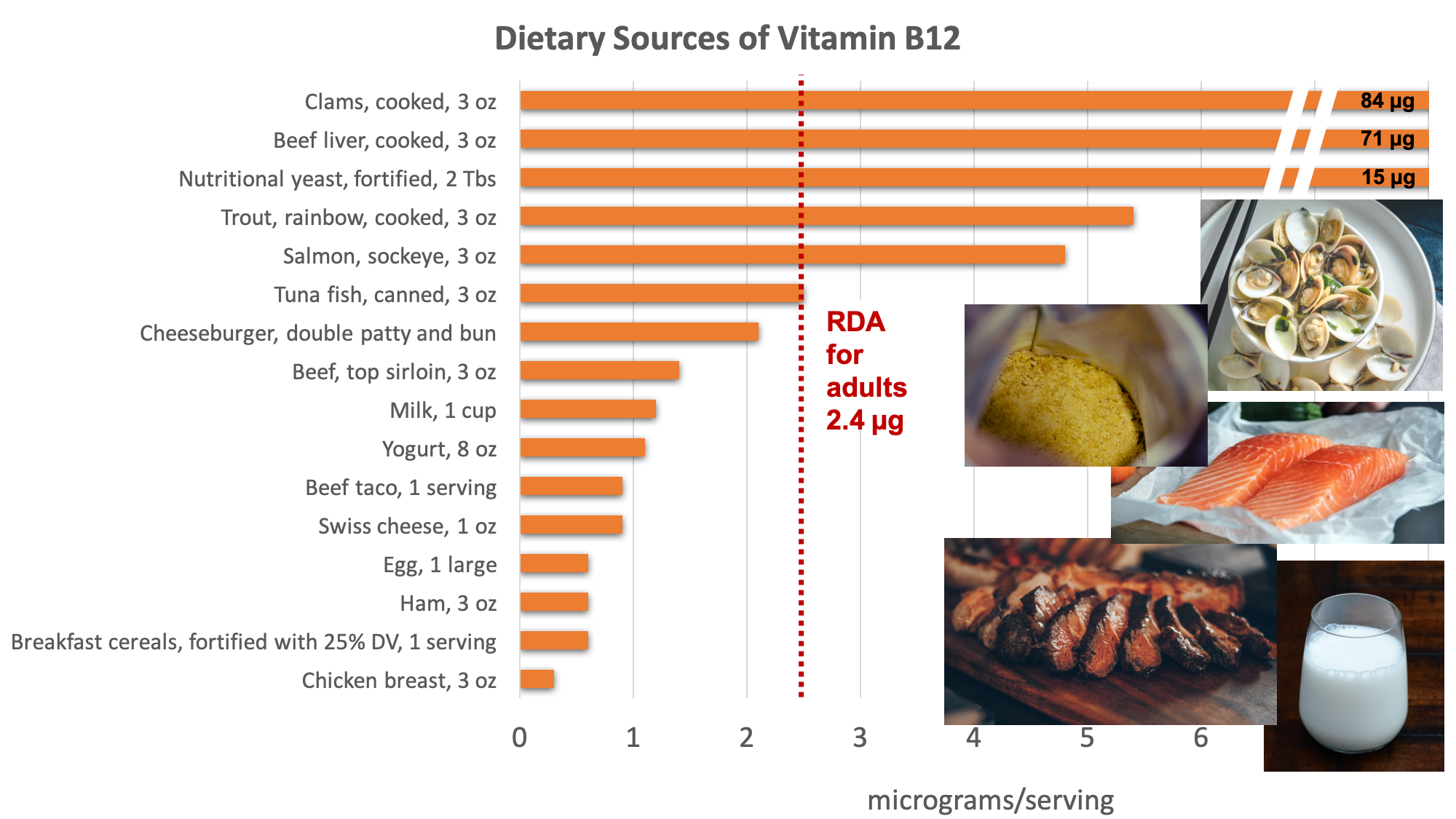
Vitamin B12 is found naturally in animal products such as fish, meat, poultry, eggs, and milk products. Although vitamin B12 is not generally present in plant foods, fortified breakfast cereals are also a good source of vitamin B12. Because vitamin B12 is only found primarily in animal products, it is important for strict vegetarians who consume no animal products (vegans) to get vitamin B12 either through
supplements
, nutritional yeast, or fortified products like cereals and soy milk. Recent research suggests some plant-based sources like edible algae, mushrooms, and fermented vegetables may contain substantial amounts of vitamin B12 as well.2
Figure 9.18. Dietary sources of vitamin B 12. Examples of good sources pictured include clams, salmon, nutritional yeast, red meat, and milk. Source: NIH Office of Dietary
When there is a deficiency in vitamin B12, inactive folate (from food) is unable to be converted to active folate and used in the body for the synthesis of DNA. However, folic acid from
supplements
or fortified foods is available to be used as active folate in the body without vitamin B12. Therefore, if there is a deficiency in vitamin B12, macrocytic anemia may occur. Vitamin B12 deficiency also results in nerve degeneration and abnormalities that can often precede the development of anemia. These include a decline in mental function and burning, tingling, and numbness of legs. These symptoms can continue to worsen, and deficiency can be fatal.4
The most common cause of vitamin B12 deficiency is the condition of inadequate intrinsic factor production that leads to poor vitamin B12 absorption, resulting in pernicious anemia. This condition is common in people over the age of 50, because production of intrinsic factor decreases with age. Pernicious anemia is treated by large oral doses of vitamin B12 or by putting the vitamin under the tongue (sublingual), where it is absorbed into the bloodstream without passing through the intestine. In patients that do not respond to oral or sublingual treatment, vitamin B12 is given by injection.
Because vitamin B12 is found primarily in foods of animal origin, a strict vegetarian diet can result in cases of vitamin B12 deficiency. Therefore, careful dietary planning to include fortified sources or
supplements
of vitamin B12 is important to prevent deficiency in a vegan diet.
No toxicity of vitamin B12 has been reported. Because of the low risk for toxicity, a tolerable upper intake level (UL) has not been established for vitamin B12.4
Attributions:
University of Hawai‘i at Mānoa Food Science and Human Nutrition Program, “Human Nutrition,” CC BY-NC 4.0



No comments:
Post a Comment